Monday, 17 November 2008

Cardinal Pole and Mary I - 1558-2008


Today is the 450th anniversary of the deaths of both Cardinal Pole, last Catholic Archbishop of Canterbury, and Mary Tudor. The English and Welsh bishops met today and visited Lambeth Palace to honour the memory of Cardinal Pole; meanwhile, a number of Requiem Masses were held in Oxford, Cambridge, Birmingham and London. I had the privilege of preaching at one of these:

We gather here this evening to remember a series of deaths that occurred exactly 450 years ago. At about six in the morning of 17 November 1558, Mary Tudor died at St James’ Palace, as Mass was being celebrated in her chamber and the priest was elevating the Sacred Host. Twelve hours later her cousin, Reginald Pole, Cardinal Priest of Santa Maria in Cosmedin and Archbishop of Canterbury, died across the river at Lambeth Palace. With them died hopes for an English Catholic restoration and the subsequent long reign of Elizabeth did much to consolidate the newly-founded Church of England.

The two cousins had much in common. Both had saintly mothers – in the Queen’s case, Catherine of Aragon (the discarded wife of Henry VIII, who remained loyal to the Catholic Faith and to the bonds of marriage); in the Cardinal’s case, Blessed Margaret Pole, the last of the Plantagenets and martyr. When Pole heard of her execution in May 1541, he declared that ‘until now I had thought God had given me the grace of being the son of the one of the best and most honoured ladies in England...but now he has vouchsafed to honour me still more by making me the son of a martyr.’ Both the Queen and the Cardinal also tried to heal the English schism but their efforts were cut short by premature death. Both have been largely vilified by posterity – the Queen remembered as ‘Bloody Mary’ and the Cardinal as her henchman.

At this Mass, we particularly pray for the repose of the soul of Cardinal Pole and we pay tribute to his legacy, even though when he died all his efforts seemed to have failed. Mgr Robert Hugh Benson once wrote that ‘it is hardly possible to imagine a character less suited, in popular estimation, to the needs of his time, than was that of Reginald Pole to the period of the English schism. They were days of fierceness, brutality and literally Machiavellian diplomacy; and the nature of the Cardinal who played so great a part in them was one of gentleness, kindness and simple transparence...It is no wonder then that the Cardinal, a lover of peace and study, sensitive in conscience and passionately zealous for souls, should, as the world reckons success, have failed in nearly every task to which he set his hand.’

In the eyes of the world, Pole was a failure. He failed in his various diplomatic missions or legations aimed against King Henry. He famously failed to be elected Pope by just a handful of votes in the Conclave of 1549 – so certain was his election thought to be that pontifical vestments were even made for him. He failed in his desire for the Church to reach reconciliation with the schismatics and, in fact, at the time of his death he was suspected by Rome of having Protestant sympathies - only the protection of Queen Mary prevented him from facing the Roman Inquisition. Moreover, his plans for Catholic restoration in England ultimately came to nothing.

Pole was perhaps a failure in temporal terms, and yet his failure can be seen also as a victory from the perspective of Divine grace. Though, unlike his mother, he was not called to shed his blood for the Faith, he risked much in defending the Papal primacy.

We remember him today as a great scholar and the friend of the likes of Michelangelo. We recall his central role in the opening sessions of the Council of Trent. Above all, we celebrate his achievements in England, even though they were left unfinished. On 30 November 1554 he reconciled the realm to the Holy See during an emotionally-charged service at Whitehall Palace. ‘If the angels in Heaven,’ the Cardinal said, ‘rejoice over the conversion of a single sinner, what must be their joy to-day at the sight of a whole kingdom which repenteth?’ Pole set aside St Andrew’s Day as an annual celebration of ‘the return this kingdom to the unity of the Church.’ The following Sunday Pole was at St Paul’s and the Lord Chancellor, Bishop Gardiner, preached on the theme, ‘Now it is high time to awake out of sleep.’

Pole told Parliament that he aimed ‘not to pull down but to build; to reconcile not to censure; to invite but without compulsion.’ He took a gradual and realist approach to the Catholic restoration, confirming property rights and refusing help from St Ignatius and the newly-founded Jesuits - not because he opposed them but because he thought England was not yet ready and because they had too close a connection to Spain. Pole organised a Legatine Synod, perhaps his greatest legacy.. He stressed the importance of the residence of clergy and of preaching and catechesis in each parish. Most notably, he decreed ‘that in Cathedrals a certain number of initiated persons be brought up, whence as from a Seminary, men may be chosen who may be worthily set over Churches...We especially wish,’ he added, ‘the children of the poor to be chosen into these seminaries.’ The Cardinal was one of the first to speak of seminaries and anticipated the Tridentine decrees, though his vision would not be actualised in his own country for another 250 years.

But these battles and dreams have long since ended for our Cardinal. We pray that he is now at peace, united with his mother, the Blessed Margaret. Though we live in very different times, the battles that Pole fought so courageously have now passed down to us. The words of Bishop Gardiner, preached on that First Sunday of Advent 1554, echo in our ears: ‘Now it is high time to awake out of sleep.’ Like the Cardinal, it is up to us not so much to pull down but to build; to reconcile rather than simply to censure; to work for the unity of the Church and to re-evangelise our increasingly ‘post-Christian’ culture. As Fr Aidan Nichols showed recently, much of this project has to happen within the Church – the re-enchantment of the Sacred Liturgy, the on-going revival of catechesis and preaching, the rediscovery of the Catholic reading of the Bible, the preaching of the Gospel of Life and, most importantly, the continual striving for holiness on the part of us all. Cardinal Pole would approve of all these targets. As we pray for the repose of his soul (and also that of Mary Tudor), we continue to pray and work for the conversion of England.

Labels: , ,

Sunday, 4 May 2008

Thoughts for Ascensiontide


The Ascension is the grand finale, when Jesus, having completed His mission of salvation, returns to the Father in Heaven. The problem is that it is very hard to imagine the circumstances of the Ascension. It is easy enough to imagine the manner of Christ’s coming into the world – His birth in the stable of Bethlehem and the adoration of the angels, shepherds and wise men – but the manner of His departure fills us with many questions.

Most paintings show the Ascending Christ being propelled up towards Heaven, rather like a rocket lifting off into space. In some churches in the past today’s Feast saw the elaborate ascension of a statue of the Risen Christ right up into the roof of the church, and sometimes a parallel descent into the ground of a figure of the devil. But we shouldn’t imagine the Lord hurtling through the stratosphere or start wondering how many light years it took Him to reach Heaven! When we talk of ‘Ascension’ we are using human language where human language doesn’t really apply. Indeed the Gospels speak of the Lord’s disappearing beneath a cloud, which in the Bible is always a sign of the mystery and majesty of God. For thirty-three years the Word was made flesh, the invisible God made visible. Now He becomes invisible once again in the cloud and God’s definitive Revelation has ended.
.
There is a pious tradition that the Ascension of the Lord took place at midday. The symbolism behind this is very powerful. After all, He is thought to have been born at midnight, at an hour when the world covered in darkness – for Jesus came into a world darkened by sin and showed us the way back to the Light. He ascended at midday, the hour when the sun is at its strongest – for Jesus, the ‘Sun of Justice,’ has now conquered death and given us new life.

And yet His light does not disappear with the Ascension; the disciples are not suddenly shrouded in darkness. No, Christ has given His light to the Church, to His followers, until He comes again. The Ascension passes Christ’s mission on to us: ‘Go, therefore, make disciples of all the nations,’ we hear in St Matthew’s Gospel, ‘baptize them in the name of the Father and of the Son and of the Holy Spirit.’ We are to become His hands and feet, His eyes and ears, His lips and tongue, and we are assured of His abiding presence with us, to the end of time. Christ is with us in the words of Scripture and in the teachings and guidance of the Church; Christ is with us most particularly in the Blessed Sacrament that we find in every church; Christ is with us in our brothers and sisters and especially in those who are most vulnerable – the unborn, the sick and the needy; Christ is with us in ourselves, thanks to our Baptism and the work of the Holy Spirit, and in the everyday situations that challenge us to put our faith into action.

The Ascension, then, is not a feast of God’s absence but a feast of God’s presence. Alleluia!

Labels: ,

Friday, 4 May 2007

Throwing Away our Wooden Swords

I've been writing my Sunday sermon this morning, based around the text of the Gospel (Jn 13:31-35: 'I give you a new commandment: love one another as I have loved you'). I am quoting this week's Catholic Herald interview with Mgr Michael Schmitz of the Institute of Christ the King. He rightly criticises all the divisions within the Church at this time of growing secularism, many (though not all) of which centre on non-essential issues:
we seem sometimes in the Church like little tribes engaged in a useless battle with wooden swords, while behind us an atomic bomb ticks. We should turn around, throw our swords away and find a way to defuse the bomb.

Amen to that!

Labels:

Friday, 2 February 2007

Lumen ad revelationem gentium


Christmas may seem a long time ago but, according to tradition, Christmas only really comes to an end today - Candlemas, the Feast of Mary’s Purification and Christ’s Presentation in the Temple, the Fourth Joyful Mystery of the Holy Rosary.

The Feast reminds us of a number of mysteries. We recall how the Virgin Mary, the Mother of God and Spouse of the Holy Spirit, came to the Temple to be purified, in obedience to the Law of Moses. A woman had to stay at home for forty days after giving birth to a son. It must have been a blessing to be obliged to stay quietly at home and care for her newborn baby in these important early days of infancy. Then, after the prescribed period was over, the parents would bring offerings to the door of the Temple: in the case of poor families, like Jesus, Mary and Joseph, two pigeons or turtle doves. And so Our Blessed Lady, the purest of virgins, came like any other mother for this ceremony of ‘purification.’ She offered her Son to God and the God-made-man entered His Temple as a helpless baby. Yet hardly anyone noticed the great event.

Hardly anyone, that is, with the exception of that just man, Simeon, and the prophetess, Anna. They symbolize for us the many generations that had been waiting for the coming of the Messiah. In them, the Old Dispensation meets the New. Filled with the Holy Spirit, Simeon tells Mary two important truths – one concerning Jesus and one concerning herself. The Child will be a ‘sign of contradiction’; He will be the cause of the fall and resurrection of many – the fall of those who reject His message and the resurrection of those who accept it. Furthermore, Mary’s own soul will be pierced by a sword – the sword first enters her at that moment and it goes ever deeper, as her Son is rejected by His own people and opposed by the Scribes and Pharisees. It eventually transfixes her soul at the foot of the cross, just as the Centurion’s lance transfixes the heart of her Son. You can see how the Feast of the Presentation brings an end to the Christmas Season and directs our gaze towards Lent and Holy Week.

In 2007, Jesus and His Church remain both a ‘light to enlighten the Gentiles’ and a ‘sign of contradiction.’ The fact that the Faith can lead to division and misunderstanding was clearly seen last week in the controversy over gay adoption. Of course, the adoption of children by homosexual couples is not the only issue here. The sanctity of the family and the sacrament of marriage (which remains the only right context for sexual relationships) are also at stake, as is the Church’s right to teach a doctrine that is from God but is at odds with the secular world view. We live amidst a clash between the faith and non-belief, between those who see religion as the answer and those who see it as the problem, between the culture of death and the culture of life. To be a Christian in the twenty-first century is not easy. It will involve rejection and unpopularity. In truth, Catholics discriminate against sin and not the sinner – no-one is ever excluded from the arms of the Church; the Church is for sinners trying to become saints. Yet, there may be a time when there are legal penalties for those who adhere to the fullness of the faith, especially under the vague rubric of political correctness and ‘discrimination’. Let us not be afraid; let us teach the Gospel with faith, hope and, above all, love! Let us accept that we are, by virtue of our baptism, signs of contradiction!

As Mary, our Mother, has gone before us, so we follow – we can expect a share in her sorrows but we hope also to eventually be with her in Heaven. Let us stay close to her Son – and stay close to His Church, which transmits and teaches the Revelation that God has given us. As we prepare to celebrate Candlemas, let us be lights to enlighten all those around us, especially the lukewarm, the lapsed, the ignorant and those who are confused about the message of Christ.

Labels: ,

Monday, 25 December 2006

A Christmas Sermon

We tend to think of the Christmas story in a rather sentimentalised way – the cosy manger, the picturesque shepherds, the happy angels, the friendly ox and ass. It’s the beautiful scene that we see on countless Christmas cards. But let’s never forget that the Christmas story contains pure dynamite. It literally turned the world upside down.

The traditional Christmas Proclamation puts Christ’s birth in context: at a particular moment (the 149th Olympiad, the 752nd year after the foundation of Rome and the 42nd year of Augustus’ reign) timelessness entered time, the invisible God became visible. Today we marvel at the fact that the baby boy lying wrapped in swaddling clothes is the Son of God, the long-awaited Messiah.
He came down to earth from heaven,
Who is God and Lord of all,
And his shelter was a stable,
And his cradle was a stall;
With the poor and mean and lowly,
Lived on earth the Saviour holy.
C. S. Lewis, the author of the Narnia stories, puts it well:
The Second Person in God, the Son, became human Himself: was born into the world as an actual man – a real man of a particular height, with hair of a particular colour, speaking a particular language, weighing so many stone. The Eternal Being, who knows everything and who created the whole universe, became not only a man but (before that) a baby, and before that a foetus inside a Woman’s body. If you want to get the hang of it, think how you would like to become a slug or a crab.(Mere Christianity)
From the first moment of His life on earth, it was clear that Jesus would be a very different Messiah from the one the Jews expected. He came to set Israel free – not from its temporal enemies but from evil, sin and death. He didn’t come as a powerful military leader but as a powerless infant. He is a great King but His first palace was a humble, dirty, uncongenial stable. Mary and Joseph could not even find a room in the inns of Bethlehem, a backward town on the margins of the Roman Empire.

The new-born King’s first courtiers were not the rich and powerful but local shepherds – and remember that shepherds in Jesus’ time were considered dishonest and listed among those ineligible to be judges or even witnesses in a law court. Outcast from respectable society but these rustics were visited by angels and became the first to pay homage to the new-born King.

Our Lord was born into poverty – He who created the Universe had nothing to His name: no clothing, no toys, no home, no food. And here’s the twist – that hungry baby came to be our food. It is indeed appropriate that בית לחם, Bêth lehem means ‘House of Bread’. It was in the ‘little town of Bethlehem’ that the ‘Bread of Life’ came into the world. At every Mass, but in an especially meaningful way at Christmas, Our Lord Jesus Christ is ‘born again’ as the priest says the words This is my Body, This is the cup of my Blood. He comes to us to be our spiritual food. Just as the shepherds worshipped Christ in the crib, so we worship the same Christ present on the altar; hidden then as a helpless child, hidden now beneath the forms of bread and wine. In the Holy Eucharist Christ makes for himself a ‘house of bread’ and at Communion we truly have amongst us Emmanuel – God with us.

We rejoice today because that powerless baby has come to do battle with sin and death. In the end He triumphed – but He triumphed through a degrading death on the cross and resurrection on the third day. The mysteries of Holy Week and Easter are never far away from our Christmas celebration; they fulfil the story that begins today. Our traditional decorations of holly and the ivy remind us of this – ‘the holly bears a prickle, as sharp as any thorn’, and ‘a berry, as red as any blood,’ making us think of the Passion; the ivy (and also the evergreen Christmas trees) signify the everlasting life which Christ won for us through his death and resurrection.

That’s why we rejoice today. That’s why we sing carols. That’s why writers and artists have celebrated the Christmas story down the centuries. Not just because we feel sentimental about the baby boy born to Mary and Joseph, but because that birth means something – it turns the world upside down, it defeats the world of darkness, it brings light into the world and it opens our way to Heaven.
Come to Bethlehem and see
Him whose birth the angels sing:
Come, adore on bended knee
The infant Christ, the new-born King.

Labels: ,

Sunday, 3 December 2006

Advent I - A Homily

Happy New Year to all of you!

Once again we start our journey over the next fifty-two weeks, commemorating the chief mysteries of the Faith as we pass from Advent to Christmas, from Lent to Easter and through the weeks of Ordinary Time, which this year will focus particularly on the Gospel of St Luke. Our liturgical journey begins today with the First Sunday of Advent.

Advent is one of my favourite times of year – the traditions, the feasts, the hymns and the excitement leading up to Christmas make it a very beautiful period indeed. But it is also one of the least understood Seasons and every year it is an increasingly up-hill struggle to resist the commercialism of Christmas and observe Advent in any real sense. This year I heard the first rendition of Silent Night in late October thanks to a busker on the Underground; already the decorations and trees are up and Santa seems to have arrived in the local shopping centre.

Advent 2006 is only three weeks long, since (rather confusingly) the Fourth Sunday of Advent is also Christmas Eve, so it is important that we make the most of it. None of us, priests included, will be able to avoid carol services, nativity plays and Christmas parties over the next few weeks – not to mention the writing of Christmas cards and last minute shopping for presents. But there are some things we can do in order to ensure that our Advent is in tune with the mind of the Church.

Just as Easter (the Feast of the Redemption) has Lent as a time of preparation and purification, so Christmas (the Feast of the Incarnation) has Advent, which is sometimes called the ‘little Lent.’ We don’t normally think of Advent as time for giving things up or taking extra things on, but that is very much its spirit - a great opportunity for changing our spiritual gears, for cleansing our consciences by going to Confession, for giving up bad habits and for spending more time in prayer, spiritual reading and good works.

Advent is a time for waiting. We wait expectantly, together with the prophets and the people of Israel, for the coming of the Messiah, born in a stable in Bethlehem. We also await His Second Coming – this is actually the focus of the first two weeks of Advent. You probably noticed that our Gospel today makes no mention of Mary or Joseph or angels or shepherds or innkeepers, but rather of signs in the heavens, of ‘nations in agony’ and ‘men dying of fear,’ and of ‘the Son of Man coming in a cloud with power and great glory.’ We begin the Church’s year by looking to the end of time and asking how watchful and ready we are for the Lord’s return. This is perhaps the key question we ask ourselves in Advent and it should encourage our meditation and lead us to form good resolutions for the new ecclesiastical year. Are we awake to God and awake for other people?

Everybody loves Christmas and I for one am itching to play my CDs of Christmas music and put up the crib in my study. However, let us not forget that the three weeks of Advent are followed by the twelve joyful Days of Christmas. Indeed, the Christmas Season continues until Candlemas (2 February) – it is only then that the great Christmas Tree and giant Nativity scene on St Peter’s Square in Rome are taken down. The weeks after Christmas are the proper time for decorations, trees and carols. Now is the time for stepping back and spending time in prayer and penance as we wait for the comings of Christ at Bethlehem and at the end of time.

By all means buy your presents, write your cards and stock up with bottles of wine and mince pies. But let’s not allow the empty commercialism of the shops and the media prevent us from keeping Advent seriously – so that by the time we reach 25th December we will have changed interiorly and have drawn closer to the Babe born for us at Bethlehem.

Labels: ,

Sunday, 26 November 2006

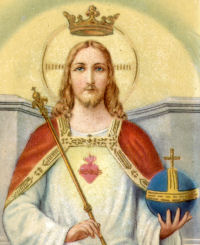
Viva Cristo Rey!

A Parish Sermon for Christ the King


Earlier this week the Church celebrated the feast of Blessed Miguel Pro, a Mexican Jesuit who was executed by firing squad on 23 November 1927. He lived at a time of great persecution of the Church in Mexico; religious services were illegal but this didn’t prevent Fr Pro from secretly celebrating the sacraments and promoting the League for the Defence of Religious Freedom. He was arrested and falsely accused of conspiracy against the Government. As the young priest stood before the firing squad he raised his arms in the form of the cross and cried: Viva Cristo Rey! Long live Christ the King!

Two years before Fr Pro’s martyrdom, Pope Pius XI introduced the Feast of Christ the King, which we celebrate today. It is the culmination and end of the Church’s Year and also an introduction to the coming Season of Advent, when we await the coming of Christ in glory.

The image of Christ the King is a familiar one in Sacred Scripture: the prophets spoke of the coming of a great King, on whom was ‘conferred sovereignty, glory and kingship’; the Angel Gabriel told Mary that her son would ‘reign over the house of Jacob for ever, and of his kingdom there will be no end’; in today’s Gospel Jesus refers to Himself as a king, though His Kingdom is not of this world; Apocalypse calls Christ the ‘Ruler of the kings of the earth.’

But what does it mean? Is Christ’s Kingship just a metaphorical title? Or is it something real in our lives? Christ is King because He is God and because He has redeemed us through the shedding of His blood. His Kingdom is ‘not of this world’; frequently in the Gospels Jesus shies away from the idea of becoming a political leader and liberating Israel. As Pius XI wrote in Quas Primas (1925), ‘this kingdom is opposed to none other than to that of Satan and to the power of darkness. It demands of its subjects a spirit of detachment from riches and earthly things, and a spirit of gentleness. They must hunger and thirst after justice, and more than this, they must deny themselves and carry the cross.’

However, today’s Feast was introduced 81 years ago in order to emphasise an important truth: that Christ’s Kingship doesn’t just involve individual Christians but the whole of mankind: Catholics and Protestants, Christians and non-Christians, believers and non-believers.
We live in a society where religion is seen as little more than a lifestyle option; where an employee of a well-known airline can be disciplined for wearing a crucifix in case it offends others; where liberty is seen as doing whatever we please rather than seeking the truth. This mentality has led to many Catholics minimalising the Faith and keeping it out of public affairs. Many believe that the Church should stay out of political matters, that a Catholic MP, for example, has no right to ‘impose’ his or her private beliefs on a Parliamentary discussion.

Today’s Feast proclaims that Christ is King in every aspect of human life and that His laws need to be followed. As Pius XI wrote, ‘while nations insult the beloved name of our Redeemer by suppressing all mention of it in their conferences and parliaments, we must all the more loudly proclaim his kingly dignity and power, all the more universally affirm his rights.’ The bishops recently did this by defending Catholic education and defeating the proposal to have a quota of non-Catholics in our already over-subscribed schools. We can also promote the Kingship of Christ by defending the Gospel of Life and fighting attempts to extend abortion, euthanasia and the scientific misuse of human life.

For the most part, it is not Christ who reigns collectively and individually; it is the ‘I,’ the ego that reigns. Yet in Christ is the salvation of the individual and of society. Christ reigns everywhere – in Parliament and in the workplace, in our families and on TV, in the classroom and the hospital, just as much as here in church on Sunday. It’s up to us to make that a reality. If Christ reigns in our lives and if we try to build up His Kingdom around us, we will promote the Kingship of Christ. As we celebrate this final Sunday in the Church’s Year and prepare for the coming of Christ in December, may Christ truly reign in our hearts, minds and will! Viva Cristo Rey!

Labels: ,

Saturday, 18 November 2006

Hic Domus Dei Est

Every year we celebrate the dedications of the four major basilicas of Rome. In August we commemorate St Mary Major, one of the most venerable Marian churches of the world. A short time ago we kept the dedication of the Basilica of St John Lateran, which is the Pope’s Cathedral and the mother church of Christendom.

Today we commemorate the dedication of the two other great Roman churches: the basilica of St Peter’s in the Vatican, one of the largest and most famous churches in the world and the scene of grand papal ceremonies; and the slightly less well-known St Paul’s outside the walls, not far from Tre Fontane (the spot where St Paul was beheaded). These two churches were originally built by the Emperor Constantine (though since rebuilt) and contain the mortal remains of the two apostles.

Peter, the rather bumbling fisherman, and Paul, the reformed persecutor of Christians, became the pillars of the Church. Peter was named the rock, despite his personal failures, and Paul became the Apostle to the Gentiles, despite his dark past. Peter and Paul are very different characters – indeed, at times they disagreed with each other over matters of Church policy – but they were both united in love of Christ, they both let grace triumph over their weaknesses and they both made the ultimate sacrifice. Both died a martyr’s death in Rome—Peter on a cross and Paul beneath the sword. Their combined gifts shaped the early Church and pilgrims have flocked to their tombs ever since their martyrdom.

Today we spiritually make a pilgrimage to Rome and honour these two Apostles. We also celebrate our communion with the Holy See and pray especially for the Successor of St Peter, Pope Benedict, who will soon make a risky journey to a hostile Turkey. We pray the Lord will strengthen and protect him, as he follows in the footsteps of the Apostles.

Labels: , ,

Sunday, 12 November 2006

We will remember them

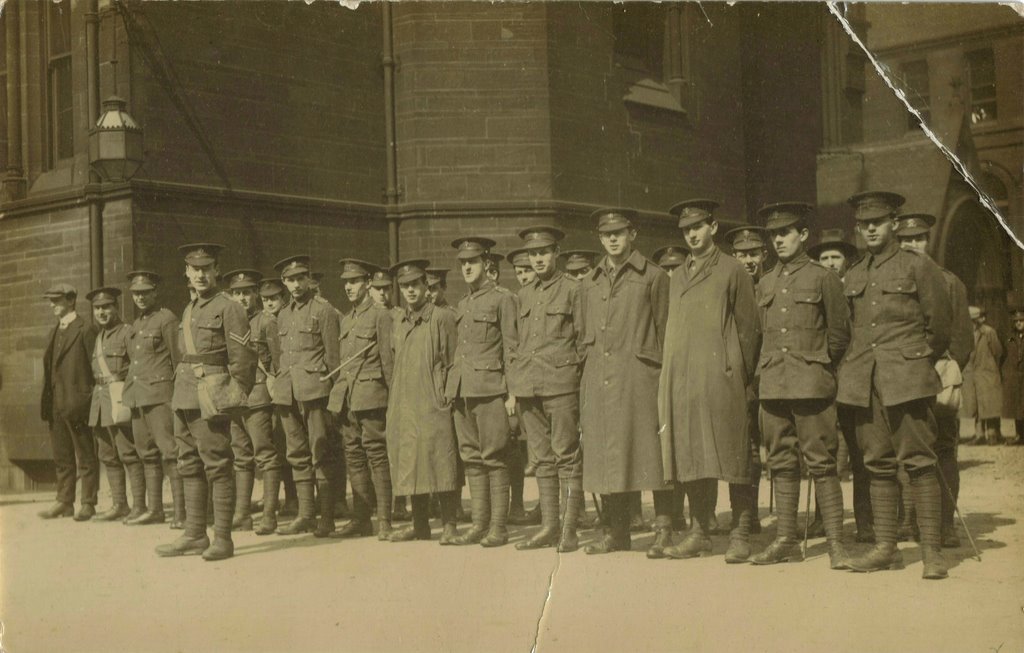
The picture shows a group of WWI officers during training, including my grandfather, Henry Norman Schofield, who is in the middle with a baton under his arm.

From today's homily

In Flanders fields the poppies blow
Between the crosses, row on row,
That mark our place; and in the sky
The larks, still bravely singing, fly
Scarce heard amid the guns below.

We are the Dead. Short days ago
We lived, felt dawn, saw sunset glow,
Loved, and were loved, and now we lie
In Flanders fields.

Major John McCrae’s poem, written on a scrap of paper in May 1915, during the Second Battle of Ypres, sums up for many the spirit behind Remembrance Sunday. Today will always be connected in our minds with the Great War of 1914-18, because it was at the eleventh hour of the eleventh day of the eleventh month in 1918 that this devastating conflict came to an end. There are currently only 52 World War One veterans still alive around the world – six of whom live in the United Kingdom. It’s amazing to think that, within a few years, the First World War will no longer be a living memory.

I remember so well listening to the memories of my Grandfather, who had gone ‘over the top’ at the Battle of the Somme with the East Surrey Regiment. Out of several hundred men in his company, there were only two survivors from the German machine-gun fire. My grandfather got fairly near the German trench, but realised that there was little chance of him single-handedly taking the enemy line, armed only with a pistol and a baton. So, he sheltered from the grenades and gunfire in a shell hole, and crawled back to his trench at night. When it was discovered that he had been studying at University before the war, he was given the unenviable task of writing letters of condolence to the families of those who had been killed. Many of us will have similar stories carefully passed down in the family.

Remembrance Sunday causes different reactions in different people – for those who have experienced war at first hand, it is a red letter day of the utmost importance; for the younger generation it might seem to be a rather irrelevant day for remembering past heroes.

Remembrance Sunday is about remembering the victims of conflict and praying for the repose of their souls. It is not about glorifying war. For the Christian, war is a result of sin, a consequence of the fallen world. War is never inevitable. Pope John Paul II said that peace always remains possible, especially with all the modern diplomatic resources. And, he added, ‘if peace is possible, it is also a duty!’

Of course, in the past, the Church sometimes actively promoted military aggression. It introduced ceremonies for the blessing of weapons and armours, and instituted military orders of Knighthood (such as the Order of Malta, which still exists today). Most famously (or, some might say, infamously) the Church encouraged the Crusades against the Turks. Many write the Crusades off as a shameful and bloody episode in our history, although it’s worth remembering that they were an essentially defensive reaction against the militant spread of Islam. We forget that for many centuries the Turks were seen as the number one threat and that, as recently as 1683, the Turks tried to capture Vienna. The Church felt duty-bound to help in the defence of Christian civilisation.

The Church teaches that war can sometimes be justified, but only if certain conditions are fulfilled. For example, a ‘just war’ must be fought for a just cause (to protect the innocent or defend basic human rights) and be declared by the competent authority. War must always be the last resort and aim to achieve security and peace, rather than being inspired by hatred or territorial greed. There should be a good chance of success and a proportionate use of means to the end. Moreover, the death of civilians is always to be avoided.

Of course, we can perhaps think of modern wars that don’t fulfil these conditions. Today we pray for peace, we hope that the lessons of history will be learned, and we remember those injured and killed by warfare, especially over the last year. We pray for members of our family and parish who died in the two world wars of the last century.

They shall grow not old as we that are left grow old:
Age shall not weary them, nor the years condemn.
At the going down of the sun and in the morning
We will remember them. We will remember them.

Labels:

Saturday, 4 November 2006

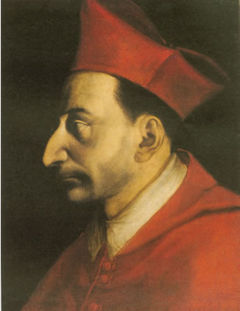
St Charles Borromeo


Everything was against Charles Borromeo becoming a saint. He came from one of Italy’s great families and lived in an age when clerics collected Church posts and offices without residing or doing the work but only to enjoy the revenues. At the age of twelve he was given an Abbacy. Then shortly afterwards his uncle was elected Pope (Pius IV). New Popes often made their relatives Cardinals and so, at the age of twenty-two, Charles found himself as the powerful and wealthy Cardinal Nephew.

But this didn’t go to the young man’s head. He lived in an age, also, of Church reform. When he became Archbishop of Milan (aged twenty-five) he applied the decrees of the Council of Trent to his new diocese with great zeal. He called a diocesan synod, founded seminaries, encouraged ‘Sunday Schools’ in the parishes and established a society of priests, called the ‘Oblates.’

His attempts at reforming the Church led to much opposition and even several assassination attempts. On one occasion, while he was at Vespers, a member of a religious Order called the Humiliati came in with a musket and shot St Charles. Luckily he was only injured lightly in the leg.

St Charles has several links with England. Many English Catholics had fled to the continent because of the persecutions under Elizabeth I. An English College was founded at Rome to train priests and St Charles was visited by St Edmund Campion and St Ralph Sherwin as they made their way back home to face eventual martyrdom. Another exile, the Welshman Owen Lewis, became his vicar-general. St Charles also had great devotion to a picture in his possession of St John Fisher, whom he regarded as a model bishop.

St Charles was full of pastoral charity – happy to sit by the roadside to teach a poor man the Lord’s Prayer and to tend the dying during a plague epidemic. St Charles is a great example to us all. Despite his privileged background he was focussed not on the temptations of the world but simply on doing his duty and following the will of God. ‘Whoever would go forward in God’s service,’ he said, ‘must begin his life anew each day, must keep himself as much as possible in the presence of God, and in all his actions must have one object, God’s glory.’

Labels: , ,

Wednesday, 1 November 2006

In Festo Omnium Sanctorum

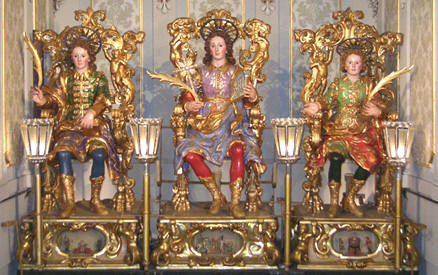
(SS Alfio, Filadelfo and Cirino)
Gaudeamus omnes in Domino,
diem festum celebrantes sub honore Sanctorum omnium:
de quorum solemnitate gaudent Angeli,
et collaudant Filium Dei.

A Short Homily for All Saints
Throughout the year we celebrate the feasts of the saints. Some will have universal significance – the first Apostles, the hosts of martyrs, the great Popes and Bishops, the learned Doctors of the Church; others will have a more local significance – England and Wales has a national calendar and Westminster a diocesan one, so we celebrate the likes of St Alban (our first martyr), St Edward (King and founder of Westminster Abbey) and the English Martyrs.

The thing that always strikes me most about the saints is their sheer number and variety. When I go abroad I love to learn about the local saints. I spent a fortnight in Italy this summer and visited the shrine of San Pellegrino (an Irish hermit who lived in the Appenines), which is located in a mountain-top village some 4,000 feet above sea level. I also had the privilege of saying Mass over the tomb of my patron, St Nicholas, which can be found in the southern Italian city of Bari. In the world of the saints, there is something for everybody. That’s why we all have our favourites.

So, today we celebrate all the saints officially recognised by the Church – the famous ones as well as the more obscure ones. But this is only part of the mystery that we celebrate on the Feast of All Saints. We also commemorate - perhaps, it could be said, we especially commemorate – the many saints in Heaven whose names we do not know.

In the first reading, St John describes his vision of ‘a huge number, impossible to count, of people from every nation, race, tribe and language’ standing in front of the Lamb, ‘dressed in white robes and holding palms in their hands.’ The white robes and palms stand for victory over sin and triumph over death. These are the blessed ones who have lived holy lives – the poor in spirit, the gentle, the merciful, the peacemakers, the persecuted – those who have lived out the Beatitudes in their daily lives and can now rejoice in the glory of Heaven. They include men and women from every age, background and race; they include, please God, members of our own family and people we have known. We honour them today and ask them for their assistance.

There’s a more personal dimension to our Feast as well. One day, we hope to be fellow-citizens of the Kingdom of Heaven, to take our place amidst the assembly of apostles, the host of martyrs and the college of confessors. The Church on earth is one of sinners trying, yearning, fighting to become saints. The witness of thousands of our brothers and sisters show us that anything is possible with the grace of God – many of the great saints (like St Augustine or St Mary Magdalene) had been great sinners. Saints are not just dead people with strange names and long beards who populate stained glass windows – they are our friends and our exemplars. They are real people who struggled with the sort of very real problems and temptations that we face, even if they wore funny clothes. Their lives show the transforming power of God’s grace.

Sanctity is within our grasp!


Labels: , ,

Saturday, 14 October 2006

James II and Ian Paisley

Today is the 373rd birthday of King James II, our last Catholic King - and, for the benefit of American readers, the guy who gave 'New York' its name because he was Governor of that colonial settlement as Duke of York.

This time last year I led a service and gave an address for the Royal Stuart Society, in which I was asked to focus on James' policy of toleration. It was quite an amazing experience since it took place on Trafalgar Square, just outside the National Gallery where there is statue of the King by Grinling Gibbons. At the end of the De Profundis roses were laid beside the image.

The 'congregation' was pretty small but slightly to my embarrasment a reporter from the Catholic Herald was present and a large article appeared the following week, with a colour photo of me. The amusing thing is that this was discovered by Ian Paisley's website, The European Institute of Protestant Studies. I won't provide a link but this is what appears on the website. It's taken from the Herald report but I love the headline Ian Paisley provides - it takes you back 100 years to the controversies of Edwardian Britain!:

Rome’s Attempt to Whitewash the Perjurer James II

Article taken from:- The Catholic Herald – 21 October 2005

THE LAST CATHOLIC king ever to rule over the British people has seldom been treated kindly by the historians who chronicled his fate. King James II is generally depicted as an autocratic bigot, a religious zealot with contempt for freedom and a man whose arrogance and recklessness led to his own downfall in the so called “Glorious Revolution” of 1688.


But historians attached to the Royal Stuart Society, an organisation set up to promote interest in the Royal House of Stuart, believe nothing could be further from the truth.

Last week, the Society commemorated the birthday of the Stuart king in a ceremony held in Trafalgar Square, London. The event formed part of a wider campaign by the Society for the “rehab” of James as an “enlightened ruler” who championed religious toleration not only for Catholics but also for Jews, Quakers and Nonconformists.

Fr Nicholas Schofield, the archivist of the Archdiocese of Westminster; addressed the group as it gathered around Grinling Gibbons’s 17th century statue of James as a Roman Caesar. “This noble square has been the focus of many celebrations this year, ranging from the bicentenary celebrations of the Battle of Trafalgar to the announcement of the winning Olympic bid,” said Fr Schofield, a priest at Our Lady of Willesden Church, north London.

"Today we add to this list of commemorations as we recall an event that took place at St James’s Palace 372 years ago. On that day, a third son was born to King Charles I and Henrietta Maria: Prince James, Duke of York and Albany."

Fr Schofield said that James, during his lifetime, would go through such incarnations as "the rosycheeked infant surrounded by siblings and spaniels in the paintings of Van Dyck; the successful admiral; the unlucky king; the devout, saintly exile."

But he said: "We think of him as an heroic figure. We come here not only to remember the king and pray for the repose of his soul, but also to resurrect his reputation." He added: "We particularly think of King James today not as a bigot but as a champion of liberty."

Fr Schofield also described the friendship between James and the younger William Penn. He told how James, a Catholic convert, resigned as Lord High Admiral in 1673 as a result of the anti-Catholic Test Act, and how Penn had been expelled from Oxford and imprisoned because of his Quaker beliefs. James granted Penn territories in the American colonies where Quakers would be free from persecution. The two men also later formed a political alliance to introduce toleration and to abolish the Test Acts, he said. In 1686, James released 1,200 Quaker prisoners and the following year Penn helped to draft the first Declaration of Indulgence suspending the Test Acts and other penal laws. The result was that toleration was extended to Protestant Dissenters, Catholics, Quakers and non Christians.

"Even more surprising to the generations brought up under the old Whig history is King James’s treatment of the Jewish community," said Fr Schofield. "James had an early positive encounter with them in the persons of David da Costa and Augustine Coronel-Chacon, Jews who had given financial aid to the Royal Family during their exile. In his colony of New York, James, as Duke of York, granted toleration to the Jews and, as recent research has shown, gave them their first synagogue. Jews had previously been barred from settling in English colonies and, indeed, all English lands since the Expulsion of 1290." He said that such a policy was especially progressive given that Jewish emancipation was not finally granted in Britain until 1830.

"So let us remember the king as a champion of toleration," Fr Schofield concluded. "His ambitious and far-reaching policy was thwarted by prejudice and given the most sinister of interpretations, especially since it threatened the Anglican establishment and was seen to leave the door wide open ‘Popish’ domination."

"James was devout in his Catholic faith and hoped for the conversion of his kingdoms, but throughout his life he showed an impressive openness to those who held different religious beliefs. Even in exile, as hopes of restoration declined, he continued to employ Dissenters in his household. On James’s 468th birthday, let us give thanks rather than apologise for this beleaguered King."

David Sox paid tribute to James on behalf of the Quakers, saying the King and Penn had laid the cornerstone of religious freedom and tolerance, "so important in our own day." Mr Sox, an executive member of the Friends’ Historical Society, told the group that by honouring James they were celebrating one of the cornerstones of what it meant "to be British."

After a series of short prayers, a bouquet of flowers was laid at the foot of the statue by Roger Dave, the secretary of the Society. Afterwards, Society chairman Dr Eveline Cruikshanks, a distinguished historian of the Jacobite period, told The Catholic Herald that inquiries were being made with the Vatican to find out why James’s cause for sainthood, opened in 1702, a year after his death, was suspended in 1740. "Not everyone in the Society would support taking the time to push the cause of beatification for James II but others would," she said.

James II became the last British monarch to be overthrown by foreign invasion when he was driven out of England by a large Dutch army under William of Orange. The invasion force was brought to England by a fleet even larger than the Spanish Armada 100 years earlier and comprised twice as many soldiers as the Royal army.

William occupied London and insisted that Parliament accepted him as the new king on the grounds that he would reassert the Protestant ascendancy in Britain. It is widely accepted today, however, that William’s truer motive was to bring England into his war with Louis XIV of France. After 1689, the new regime passed the Toleration Act which merely exempted Trinitarian Dissenters from penalties of the law without confer¬ring equal rights. For Jews, Catholics, Quakers and Unitarian Dissenters there was no toleration but renewed persecution.

I took comfort from its inclusion on the site because you must be doing something right if Ian Paisley attacks you!

On the home page, by the way, they give five reasons 'why Catholic is not Christian,' spelling 'tiara':
Trinity
Inter-mediation
Authority
Remission
Assurance.

Hmmmm.

Labels: ,

Saturday, 7 October 2006

Feast of the Holy Rosary: A Sermon


What comes to our minds when we think of the Rosary? We think of the parishioners who recite the Rosary after our weekday Masses, we think of the Rosary processions or vigils that we have participated in, we think of the times we have fumbled with our beads at home or in church. We don’t tend to think of battles. And yet it is a series of military victories that led to the creation of today’s Feast of Our Lady of the Rosary.

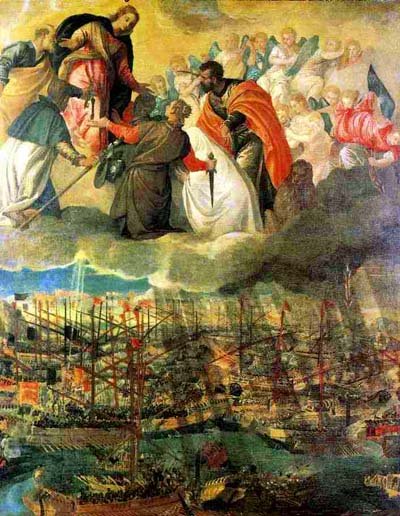
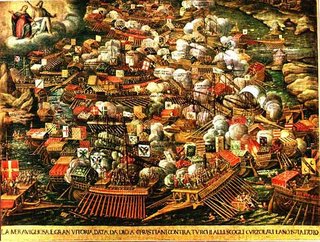
On 7 October 1571 the forces of Christendom, under the command of Don Juan, defeated the Turks at Lepanto. The famous sea victory was attributed to the intercession of the Blessed Virgin because the Rosary had been recited both by the soldiers before battle and by many of the faithful in Rome. St Pius V instituted the Feast of Our Lady of Victories and, shortly afterwards, Gregory XIII changed this to Our Lady of the Rosary. In the early eighteenth century, following some further victories against the Turks, the Feast was extended throughout the Church. And so October became known as the month of the Holy Rosary.
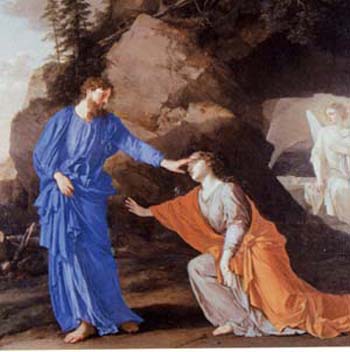
These historical events remind us of the importance and power of the Rosary. Numerous popes and saints have recommended the prayer as an effective weapon in the Church’s spiritual armoury; indeed Padre Pio called it ‘the weapon.’ At Fatima the Blessed Virgin, who identified herself as ‘the Lady of the Rosary,’ told the three young visionaries: Pray the Rosary every day… to obtain peace in the world.

Let us have trust in Our Lady and, especially in this month of October, pray the Holy Rosary. It’s a wonderfully flexible prayer. It doesn’t depend on spending long hours kneeling in church. We can fit it into the spare moments of the busiest day – I often say a decade or two while I walk along the street or wait for the bus. If Mary can help win great battles then she can also help us with our own battles, our worries and problems.
Remember, O most gracious Virgin Mary, that never was it known that anyone who fled to thy protection, implored thy help, or sought thy intercession was left unaided. Inspired with this confidence, I fly to thee, O Virgin of virgins, my Mother; to thee do I come; before thee I stand, sinful and sorrowful. O Mother of the Word Incarnate, despise not my petitions, but in thy mercy hear and answer me. Amen

PS Buona festa to Fr Tim (Hermeneutic of Continuity) at Our Lady of the Rosary, Blackfen.

Labels: ,

Sunday, 24 September 2006

Spiritual Childhood

In today’s Gospel, we once again see Jesus turning the values of the world upside-down. Jesus talks about His forthcoming passion and death. But, as with so many other occasions, the disciples fail to understand, they just don’t get it. They are busy arguing which one of them is the greatest. So, Jesus calls the Twelve around Him and presents a little child to them as a model of discipleship.

The saccharine image of Jesus embracing the little child is a familiar one and yet, for the time, it was revolutionary. In antiquity, children stood for very little. Unwanted children were simply discarded and infanticide was very common. Seen as incomplete human beings, they had no prestige or status - even a great thinker like Plato put children on the same level as slaves and beasts. Children stood for nothing and yet here we find Jesus, the Son of God, the long-awaited Messiah identifying Himself with a little child.

What is Our Lord saying to us? We all know that children are far from perfect - they can be very selfish and cruel, they can be silly and irresponsible, they can just as much be a cause of sorrow as of joy. But, despite all this, we can learn great spiritual truths from children.
First of all, children know their limitations and are absolutely dependant on adults, especially their parents and guardians. A child is full of expectations and has faith that it will receive everything it needs, whether it be food or the latest computer game. Likewise, as God‘s children, we need to entrust God with everything. Faith involves having the attitude of a child and recognising who is really in charge - God our Creator and not us creatures.

One of the great modern saints, St Therese of Lisieux, a Carmelite nun who died at the age of 24, lived each day with an unshakeable confidence in God's love and acknowledged everything as a gift. She described her ‘little way’ in these terms: ‘it is to recognize our nothingness, to expect everything from God as a little child expects everything from its father; it is to be disquieted about nothing…To be little is not attributing to oneself the virtues that one practices, believing oneself capable of anything, but to recognize that God places this treasure in the hands of his little child to be used when necessary; but it remains always God’s treasure.’

Another great thing about children is that they are always themselves. This is demonstrated by the story of the Emperor’s New Clothes. As you will remember, two swindlers come to the court to sell clothes made of their unique material, which was ‘invisible to any man who was unfit for his office or unpardonably stupid.’ The Emperor commissions a suit and wears it at a great procession - everybody pretends to admire the non-existent clothes until a little child shouts out: ’But he has nothing on at all!’ The adults are full of pride and don’t want to lose face - like so many people, they’re busy trying to become somebody or something else. They make life so complicated. The child, on the other hand, is simple, innocent, direct, not afraid to be himself and speak the truth. And that’s what we should aim at - to be who God intends us to be and not to pretend to be someone else.

Inspired by the Gospel, let us become like little children so that we can enter the Kingdom of Heaven. Being childlike doesn’t mean being childish or simple-minded. It does mean abandoning ourselves to God and entrusting everything to him. It does mean becoming the person God wants us to be - being ourselves. And it does mean being young in spirit - cheerful rather than solemn, full of wonder at God’s creation rather than being cynical. ’Anyone who welcomes one of these little children in my name, welcomes me; and anyone who welcomes me welcomes not me but the one who sent me.’

Labels:

Sunday, 3 September 2006

The Marian Shrine of London


I've mentioned Our Lady of Willesden before on this blog but, as it's my last evening here, I feel I should pay tribute to her maternal patronage over the last five years. Here is a talk about the shrine which I normally give to pilgrims:

I’m sure that many of you have been to one of the great Marian shrines: Lourdes, Fatima, Loreto, Altoetting or Guadalupe. And even though many of you have probably been to Walsingham as well, it’s very easy to associate these great sanctuaries with other countries and to forget that England was once well known for it’s remarkable devotion to Our Lady, especially before the Reformation.

In the middle ages, Our Lady was considered one of the patrons of England, together with St Peter, St Edward and St George. From at least the fourteenth century, England was known as ‘Our Lady’s Dowry’ – a land given especially to her as a wedding gift for her protection. Indeed, at the Battle of Agincourt (1415) the English soldiers were supposed to have cried ‘Our Lady for her Dowry; St George and St Edward to our aid!’ Devotion to Our Blessed Lady saturated everyday life: even many of our common flowers were named after her: ‘Marigold’ (or ‘Mary’s Gold’), ‘Foxgloves’ were ‘Our Lady’s Gloves’ and the ‘Fuchsia’ was ‘Our Lady’s Eardrops’.

At the heart of this veneration of Our Lady were her shrines. This afternoon I’d like to introduce to you Our Lady of Willesden: a shrine particularly popular with Londoners of St Thomas More’s generation and a shrine that still thrives today, in the heart of suburban London.

Twenty-first century Willesden may seem a rather strange place for a Marian shrine – the grey, bustling streets; the endless shops selling exotic foods; the distant strains of reggae music. But once, not that long ago, these busy streets were quaint country paths lined with hedgerows and the parish of Willesden was a collection of sleepy hamlets (like Harlesden and Neasden) and acres of farmland and woodland.

At the heart of it all was the parish church – St Mary’s, Willesden, about 20 minutes walk from here. The church is first mentioned in 1181, though there was probably a wooden church from at least the tenth century. The church of St Mary’s has, of course, a special pertinence for our story since it was here that the shrine of Our Lady of Willesden was originally located before the Protestant Revolution. And that brings us to a rather difficult question: why Willesden?

Most Marian shrines are blessed with carefully handed-down traditions concerning their origins - normally involving a vision, miracle or vow. For example, the most famous English shrine - Walsingham - originated with a vision of Our Lady to a wealthy widow ordering the building at Walsingham of a replica of the Holy House of Nazareth. But the origins of the shrine at Willesden are more obscure – we know it existed, but we don’t know how it started.

It seems, from a study of the early sources, that pilgrims only started travelling to Willesden in the late fifteenth century, probably during the reign of Henry VII (the first Tudor King). Though there are plenty of references to the church of Our Lady at Willesden, the phrase ‘Our Lady of Willesden’ is only first mentioned in a will of 1500.

Our Lady must have answered the prayers of locals and word must have spread. Moreover there seems to have been an ancient holy well near the church which was supposed to cure blindness and other eye disorders – this isn’t mentioned in early sources but it exists to this day, having been restored a few years ago. Indeed the Anglican vicarage of St Mary’s must be one of the few in the Church of England that distributes bottle of water from a holy well! It’s interesting to note that Marian shrines often had “holy wells”: in Lancashire there’s a place called Ladyewell; the name “Walsingham” means the “village of wells”; and “Willesden” itself comes from the Anglo-Saxon Wiell-dun, meaning “hill of springs” or “spring at the foot of the hill”.

Willesden became a sanctuary beloved by Londoners. Situated in a charming setting on the Paddington-Harrow road, a pilgrimage to Willesden also meant an excursion into the country. Pilgrimages were not only seen as works of devotion and penance, but as a welcome change to the daily routine, an opportunity to visit far-flung places and perhaps indulge in a spot of sight-seeing, shopping and recreation. Indeed, several contemporaries noted the drunken behaviour of the pilgrims to Willesden!

Archaeologists have found pilgrim badges to Willesden in the London area. In 1502 Willesden was included by no less a person than the Queen, Elizabeth of York, in a list of Marian shrines to whom she was sending an offering.

Willesden’s most famous pilgrim must be St Thomas More, as can be seen on our painted sign outside the church. He was not only attracted to Willesden by the shrine but also by the nearby home of his step-daughter, Alice, and her husband, Sir Giles Alington. In early April 1534 the saint visited Willesden for the last time, aware, no doubt, of his imminent arrest and trial for treason, and we can imagine him praying for strength before the statue of Our Lady.

St Thomas More also mentioned Willesden in his writings against the Protestant reformers, who themselves cite Willesden as an example of idolatrous pilgrimage. It was clear that things were changing. July 1538 saw the removal of some of the most famous images of Our Lady from their shrines to Thomas Cromwell’s house in Chelsea. By the end of the month, the statues from Walsingham and Ipswich were awaiting their fate in London. According to the chronicler Edward Hall, “the ladie of Wilsdon” was one of those taken to London, where she perished on a great bonfire of “notable Images” arranged by Cromwell in the early autumn of 1538.

As time went on, Our Lady of Willesden was forgotten, though there is evidence of some secret Catholic activity in the area as late as the seventeenth century. But it is in 1885 that the next chapter begins, when Cardinal Manning sent a Catholic priest to Harlesden – Fr Bernard Nicholas Ward (who later became the first Bishop of Brentwood) – and Mass was said for the first time since the Reformation, in a house near Willesden Junction station.

Soon, the medieval shrine was revived. A piece of wood was obtained from an old oak which had overlooked the original shrine at St Mary’s and a new statue was carved and blessed by Cardinal Vaughan in 1892. Eleven years later, the open-air processions of the statue were begun. Public Catholic processions were fairly uncommon at the time and therefore attracted controversy. In 1905 protests were made to the Willesden Petty Sessions and it was even suggested that the priest should pay a fine of £50. On the day of the procession, banners appeared with the slogan: HARLESDEN PROTESTANTS PROTEST AGAINST THE ILLEGAL AND IDOLATROUS PROCESSIONS. Insults were thrown out from the more vocal Protestant spectators of the procession, who started to sing, “There is a Fountain filled with Blood” (calling to mind the Protestant martyrs under the Catholic Mary Tudor). The Catholics fought back with “God Save the Pope” and soon the full armoury of Celtic Catholicism was brought into action - a band of pipes and drums effectively silenced the hecklers!

In 1931, the present church was opened and pilgrimages continued. Perhaps Our Lady of Willesden’s finest hour came in 1954, when she crowned by Cardinal Griffin at Wembley Stadium during the Marian Year, before a crowd of over 90,000. In 1958 the shrine was visited by a holy priest who would later be canonised – St Josemaria Escriva, founder of Opus Dei, who took the opportunity of his pilgrimage to make his annual dedication of Opus Dei to Our Lady. He visited on at least two other occasions. Willesden is unique among English shrines in claiming two saints amongst its pilgrims – More and Escriva, a martyr and a confessor, both great devotees of the Sacrifice of the Mass, both great models in the living out of an authentic lay apostolate.

So Willesden has been given a new prominence - not only because of its links with our Catholic past but also because of its location on the edge of Central London, in the midst of one of the world’s largest and most ethnically diverse cities. Downtown Harlesden may lack the peaceful hedgerows of Walsingham or the rolling grounds of Aylesford but this shrine is unique in witnessing to the presence of Mary in the midst of our busy metropolis – a great capital, for sure, but also a city with many problems: poverty, marginalisation, prejudice, crimes against Life, crimes against our fellow men and crimes against God. And Mary is here in our midst, protecting us, interceding for us, channelling grace upon grace to us and comforting us. And because Mary is here, so is her Son. Mary is pointing to her Son in the statue – she holds Him up as He blesses the world. Ad Jesum per Mariam. To Jesus through Mary.

Shrines like this show us that our Faith is ‘incarnational.’ Ours is not a Faith that tries to escape from the world or to ignore human weakness. No, God fully involves Himself in His Creation. The Word became flesh in the womb of a Virgin, taking on the condition of a servant and even dying on the cross so as to raise us up to the life of the Blessed Trinity. Before He ascended to the Father, Christ promised that He would be always with us – in good times and bad times, in sickness and in health, in our successes and in our sorrows. That’s what a shrine like this in the midst of twenty-first century London proclaims to the world. God is with us! Through Mary, Our Lady of Willesden, Jesus is with us! We pray to her, especially, for the protection and evangelisation of London, of other cities and towns, indeed of our whole country! We pray that we will rediscover our roots and make England, the ‘Dowry of Mary’, a country where the Blessed Virgin is honoured, just as she was of old.

Our Lady of Willesden, pray for us!

Labels: , ,

Tuesday, 18 April 2006

The Easter Octave - the Forgotten 'Holy' Week


After the intense drama of Holy Week, many people find the Easter Octave something of an anti-climax. This is especially the case today (Easter Tuesday), with most of the population half-heartedly returning to work and (even) to school. Yet the Easter Octave is, in truth, another 'holy' week, just as full of spiritual drama and intensity as last week. Every Mass is a 'Solemnity,' complete with Sequence and solemn dismissal (Ite missa est, alleluia, alleluia) - the whole week, indeed, is an extension of Easter Sunday (the Preface at Mass even refers to 'this' Easter day).

As Catholics we need to rediscover the celebratory side of Easter week and make it the joyful counterpart to the austerity of Holy Week. All sorts of colourful Easter customs used to make sure that this was a week of light-hearted hilarity. In medieval Bavaria, for instance, the priest told funny stories and sung comic songs at the end of Easter Mass so that the congregation would be convulsed in Risus Paschalibus (Easter Laughter). In Russia anybody could enter the church to ring the bells throughout the day. Easter week was a time of feasting and playing (even distinguished prelates were to be found indulging in a game of handball). In Rome business transactions and even marriage ceremonies were deferred during this week. And yet, in our increasingly secular society, we're just given one bank holiday and then expected to return to normality.

Let us try to remain festive for the rest of the week, even if it means an interior festiveness while we go about our daily chores in the workplace. Why? Because Christ is Risen. Because Christ has conquered death. And, crucially, because He has promised that we too will have a share in His Resurrection, just as we have a share in His Passion.

Christus vincit, Christus regnat, Christus imperat!

Labels: ,

Saturday, 8 April 2006

Musings on Palm Sunday


Today, we celebrate the triumphant entry of Jesus into Jerusalem. He is greeted by jubilant ‘Hosannas’ and the waving of palms, which are kingly emblems of joy and victory. Yet we have the advantage of hindsight – we know that those Hosannas will change, within days, into shouts of ‘Crucify him!’ How often we do the same! We know that it is so easy to praise God with our lips one moment and then crucify Him again and again through our sinful actions. Today we ask forgiveness for those times and pray that we will be granted a share in Christ’s death and resurrection.

As we enter Jerusalem with Jesus waving palms, we begin Holy Week. It’s vital that we make this week distinctive from other weeks. It should be a holy week; even if we’re working or even going on holiday, we need to take the time to reflect on the drama of Christ’s passion and what it means for us. A good way to do this would be to read at home one of the Passion Gospels at our own pace. I often supplement this by listening to one of the many pieces of music written about these events – for example, Bach’s St Matthew’s Passion or Handel’s Messiah, much of which will be aired on radio this week.

Most importantly, we should attend the important and beautiful services this coming week, especially on Thursday evening, Friday afternoon and Saturday night. Remember that if you’re working on Good Friday, there is still an obligation to fast and abstain from meat.

Finally, let’s bring all these wonderful events into our daily lives. I always like the custom of keeping the palms from this Mass and putting them around the house – behind a picture or crucifix, in the kitchen or the bedroom. They remind us through the year of the salvation that has been won for us – for you and me – and in this we can truly rejoice! ‘Hosanna! Blessings on Him who comes in the name of the Lord! Blessings on the coming kingdom of our father David! Hosanna in the Highest Heavens!’

Labels: ,

<< # St. Blog's Parish ? >>